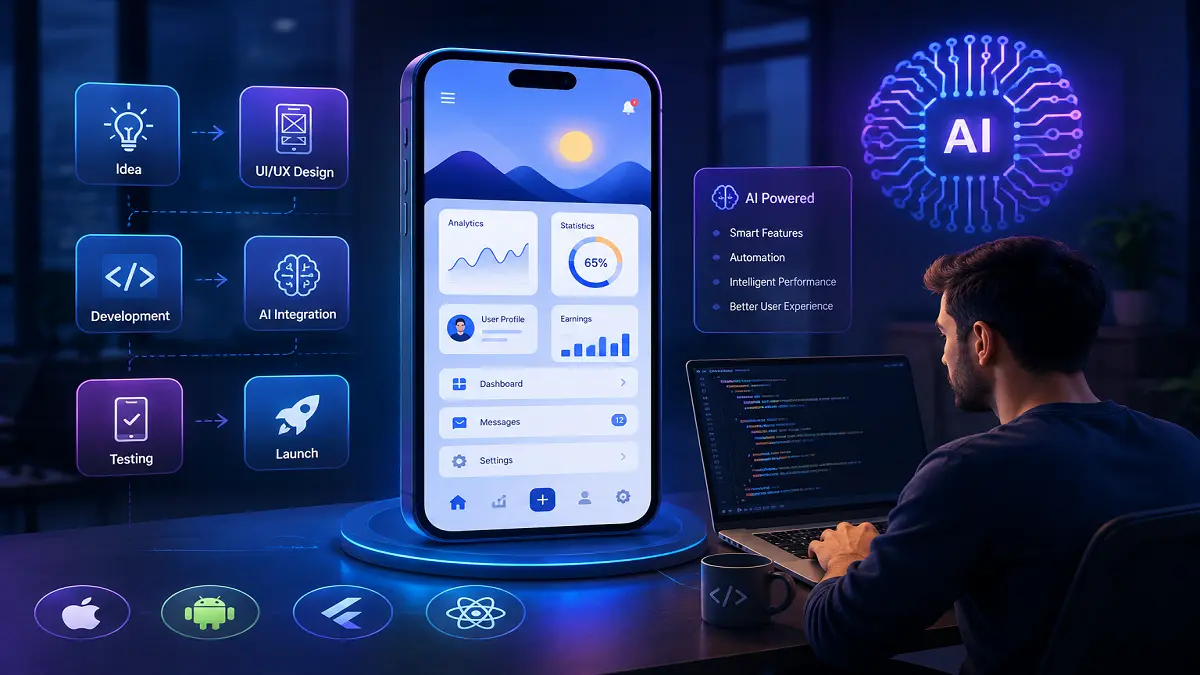
Mobile app development presents a significant growth opportunity for UK startups. A well-designed mobile application can help a business reach new customers, improve user engagement, streamline operations, and create additional revenue opportunities.
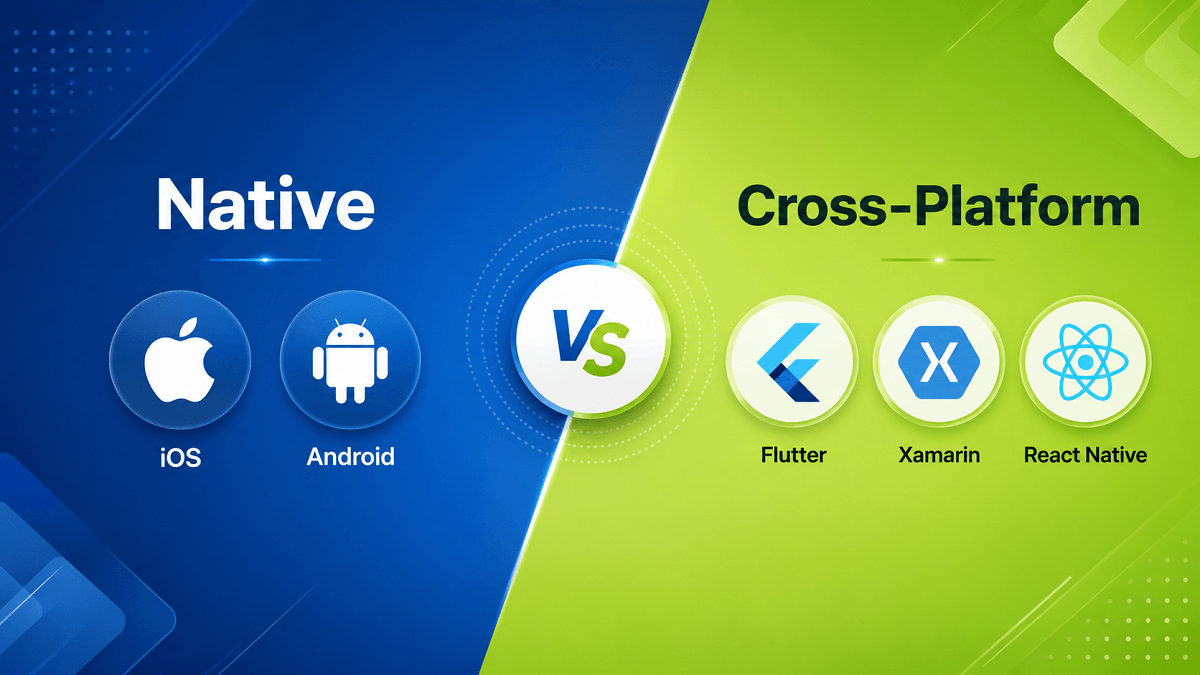
However, before planning the design or features of an app, founders must make an important technical decision: should they choose native or cross-platform app development?
Native development involves building separate applications for iOS and Android. Cross-platform development, meanwhile, allows developers to create applications for multiple operating systems using a largely shared codebase.
The right option depends on several factors, including:
- Development budget
- Time to market
- Performance requirements
- User experience
- App complexity
- Long-term scalability
This guide compares native vs cross-platform app development to help UK startups choose the most suitable approach for their products.
What Is Native App Development?
Native app development is the process of building a mobile application specifically for one operating system.
An iOS application is normally developed using technologies such as Swift and SwiftUI, while an Android application may be built using Kotlin and Jetpack Compose.
Because iOS and Android have different development environments, businesses usually need separate codebases for each platform. The iOS and Android versions must also be designed, developed, tested, updated, and maintained individually.
This can increase development costs and project timelines. However, native development gives developers direct access to the operating system, platform-specific APIs, and device hardware.
As a result, native apps can offer excellent performance, greater technical flexibility, and a user experience that closely follows the conventions of each platform.
Key Advantages of Native App Development
Native applications offer several benefits:
- High performance and responsiveness
- Direct access to device hardware
- Better support for platform-specific features
- Greater control over animations and interfaces
- Strong compatibility with operating system updates
- User experiences tailored specifically to iOS or Android
Native development is often suitable for complex applications that require advanced hardware access, demanding graphics, background processing, augmented reality, Bluetooth connectivity, or other platform-specific capabilities.
Potential Disadvantages of Native Development
The main disadvantage is the need to build separate applications for iOS and Android.
This can result in:
- Higher initial development costs
- Longer development timelines
- Separate testing and maintenance processes
- A larger development team
- Additional work when releasing new features
For startups with limited budgets, building two separate applications at the same time may not always be practical.
What Is Cross-Platform App Development?
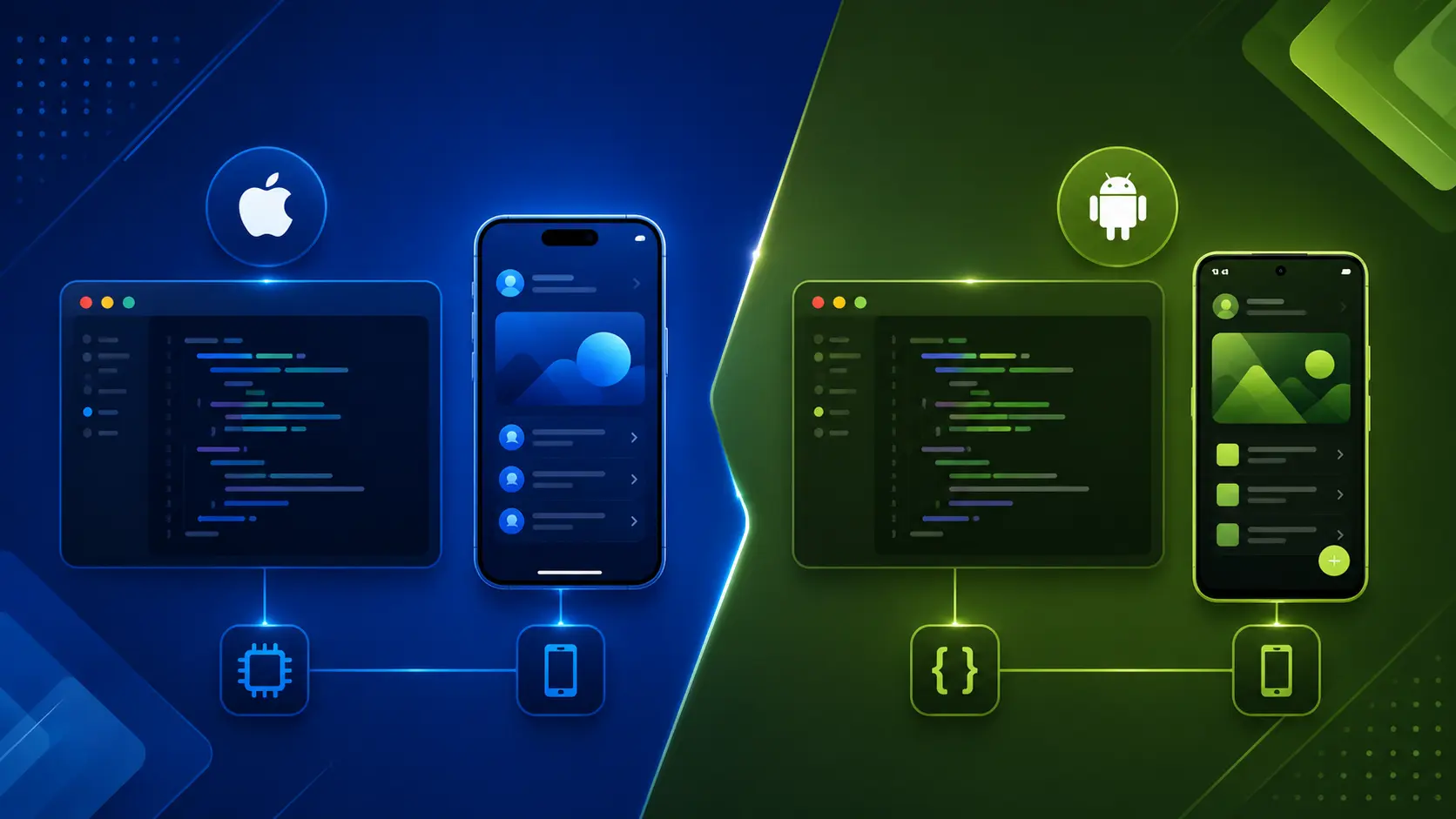
Cross-platform app development allows developers to create mobile applications for multiple operating systems using a shared codebase.
Popular cross-platform development frameworks include Flutter and React Native.
Flutter allows developers to create applications for different platforms using the Dart programming language. React Native enables developers to build mobile applications using JavaScript and React-based technologies.
Although cross-platform frameworks allow a large percentage of the code to be shared, this does not always mean that every line of code will be identical across iOS and Android.
Developers may still need to add platform-specific code for:
- Device hardware
- User permissions
- Payment systems
- Notifications
- Camera or location services
- Native interface controls
- Third-party integrations
Even with these adjustments, cross-platform development can reduce duplicated work and make it easier to launch an app on both major mobile platforms.
Key Advantages of Cross-Platform Development
Cross-platform development offers several advantages for startups:
- One largely shared codebase
- Faster development
- Lower initial development costs
- Simpler feature updates
- Easier maintenance
- Faster launch on iOS and Android
- Consistent branding across platforms
It is particularly attractive for startups that want to test an idea, release a minimum viable product, or reach both iPhone and Android users without funding two completely separate projects.
Potential Disadvantages of Cross-Platform Development
Cross-platform development is not suitable for every type of application.
Possible challenges include:
- Platform-specific performance limitations
- Additional work for advanced device features
- Dependence on third-party frameworks
- Differences between iOS and Android behaviour
- The need for native modules in complex applications
- Delays in supporting certain new operating system features
The suitability of cross-platform development depends on the complexity of the application and the capabilities of the chosen framework.
Native vs Cross-Platform App Development for UK Startups
There is no single development approach that is right for every business. UK startup founders should consider their product requirements, target audience, available budget, launch goals, and long-term plans before making a decision.
Below is a detailed comparison of native and cross-platform app development.
Development Cost
Cost is often one of the most important considerations for a startup.
Native App Development Costs
Native development usually requires a higher initial investment because separate applications must be created for iOS and Android.
A business may need:
- iOS developers
- Android developers
- UI and UX designers
- Quality assurance specialists
- Backend developers
- Project managers
Each version must be developed, tested, and maintained separately. New features and updates may also need to be implemented twice.
This can increase the overall cost of mobile app development, especially when the business intends to launch on both platforms at the same time.
Cross-Platform App Development Costs
Cross-platform development can reduce costs by allowing developers to reuse business logic, interface components, API integrations, and other parts of the application.
This makes cross-platform app development services appealing to UK startups that want to launch on both iOS and Android without paying for two complete development projects.
However, founders should not assume that every cross-platform app will be inexpensive.
Applications involving complex features such as the following may still require a significant budget:
- Online payments
- Video calling
- Live location tracking
- Artificial intelligence
- Real-time messaging
- Advanced security
- Complex third-party integrations
- Hardware connectivity
The final cost will depend on the app’s complexity, functionality, design requirements, backend infrastructure, and ongoing support needs.
Time to Market
Launching an app early can help a startup test customer demand, collect user feedback, attract investment, and improve its product before competitors enter the market.
Cross-Platform Development Time
Cross-platform development often supports a faster launch because much of the app’s functionality is built once and then deployed across multiple platforms.
Developers can share code for:
- Business logic
- User interface components
- API connections
- Data management
- Authentication
- Core app features
This can shorten the development process and allow a startup to release its iOS and Android applications at approximately the same time.
Cross-platform development is therefore a strong option for startups that want to launch an MVP quickly.
Native Development Time
Native development may take longer when iOS and Android applications are being created simultaneously.
Each application requires separate development and testing. Teams must also account for differences between platforms, devices, operating system versions, screen sizes, and technical requirements.
However, native development may still be suitable for a phased launch.
For example, a startup may choose to launch an iOS application first if research shows that most of its initial users own iPhones. The Android version can then be developed once the product has gained traction or secured additional funding.
App Performance
Performance is another major consideration when comparing native vs cross-platform app development.
Native App Performance
Native development provides direct access to platform APIs, development tools, and device capabilities. This can make native apps highly responsive and suitable for demanding functionality.
Native development may be the stronger choice for apps involving:
- Advanced animations
- High-quality graphics
- Augmented reality
- Virtual reality
- Continuous background activity
- Bluetooth or wearable connectivity
- Heavy data processing
- Advanced camera functionality
- Complex location services
- Gaming features
Because the app is built specifically for one operating system, developers have greater control over memory usage, responsiveness, and hardware integration.
Cross-Platform App Performance
Modern cross-platform frameworks can provide strong performance for many business applications.
Cross-platform development can work well for:
- E-commerce apps
- Booking systems
- Marketplaces
- Food delivery apps
- Fitness applications
- Educational platforms
- Internal business tools
- Customer portals
- Subscription services
- On-demand service apps
The decision should not be based on general assumptions about speed alone.
Startups should identify which parts of the application are likely to be performance-intensive and determine whether the chosen cross-platform framework can support them.
Where necessary, developers can create native modules for specific functionality while keeping the rest of the application within the cross-platform codebase.
User Experience
A mobile application must provide an intuitive and consistent user experience.
Native App User Experience
Native development makes it easier to follow the design standards and interaction patterns of a specific operating system.
Developers can create:
- iOS-specific gestures
- Android-specific navigation
- Platform-specific menus
- Familiar buttons and controls
- Interfaces that match user expectations
This can help the application feel more natural to users on each platform.
Native development is particularly valuable when the user experience must be closely aligned with Apple or Android design conventions.
Cross-Platform App User Experience
Cross-platform development can help businesses maintain consistent branding and functionality across devices.
This can be valuable for startups that want users to have a similar experience regardless of whether they are using an iPhone or Android device.
However, developers must still account for differences in:
- Screen sizes
- Device types
- Navigation patterns
- Operating system requirements
- User permissions
- Accessibility settings
- Hardware capabilities
A cross-platform app should not simply display an identical interface on every device. It must still be optimised for the behaviour and expectations of each platform.
Maintenance and Updates
Maintenance is an important long-term consideration for startups.
Native App Maintenance
Native applications require separate updates for iOS and Android. Fixing a bug or introducing a new feature may require changes to both codebases.
This can increase:
- Maintenance costs
- Testing requirements
- Release management work
- Development time
- Team coordination
However, separate codebases also give developers greater control over how features work on each operating system.
Cross-Platform App Maintenance
Cross-platform apps can be easier to maintain because many updates can be made within the shared codebase.
A development team may be able to fix an issue or introduce a feature once and then release it across both platforms.
This can simplify ongoing development and help startups release improvements more frequently.
Platform-specific testing will still be necessary, particularly when an update affects native features, permissions, payments, notifications, or device hardware.
Scalability
Startups should consider not only what the app needs today but also how it may evolve in the future.
Cross-platform development can provide a flexible foundation for MVPs and early-stage products. It allows businesses to launch quickly, validate demand, and improve the app based on real user feedback.
However, if the application is expected to rely heavily on advanced device functionality or require exceptionally high performance, native development may offer greater long-term flexibility.
Scalability also depends on factors beyond the mobile framework, including:
- Backend architecture
- Database performance
- Cloud infrastructure
- API design
- Security
- Code quality
- Development processes
- Monitoring and maintenance
A poorly structured native app may be more difficult to scale than a well-designed cross-platform application. The quality of the architecture and development team is therefore just as important as the technology selected.
When Should a UK Startup Choose Native Development?
Native app development may be the better choice when:
- The app requires advanced device hardware access
- Performance is central to the product
- The application includes complex graphics or animations
- The user experience must be highly platform-specific
- The app relies heavily on background processing
- The business is launching on only one platform initially
- The company has sufficient budget and development resources
- Long-term control over platform-specific features is essential
Examples may include advanced gaming applications, augmented reality products, hardware-connected apps, or applications involving complex multimedia processing.
When Should a UK Startup Choose Cross-Platform Development?
Cross-platform development may be the better choice when:
- The startup has a limited development budget
- The product must launch quickly
- The business wants to target iOS and Android users
- The startup is developing an MVP
- The app uses relatively standard functionality
- Consistent branding across platforms is important
- The business wants to simplify maintenance
- The product needs to be tested before a larger investment
Cross-platform development can be particularly suitable for booking platforms, marketplaces, e-commerce applications, food delivery services, internal business systems, subscription apps, and customer service platforms.
Native or Cross-Platform: Which Is Better?
For many UK startups, cross-platform app development offers a practical balance between cost, time to market, platform availability, and ongoing maintenance.
It allows startups to reach both iOS and Android users while avoiding much of the duplicated work associated with separate native applications. This makes it a strong choice for MVPs and products with standard business functionality.
Native development remains the better option when an application requires maximum performance, advanced hardware integration, complex platform-specific functionality, or complete control over the user experience.
The decision should not be based on development cost alone.
Before choosing between native and cross-platform development, startups should consider:
- Who will use the application
- Which platforms the target audience prefers
- What features the app requires
- How quickly the product must launch
- How much funding is available
- How the application may grow
- What level of performance is necessary
- How the app will be maintained after launch
Working with an experienced mobile app development company can help founders assess their requirements, select the appropriate technology, and create a scalable development strategy.
Final Thoughts
The native vs cross-platform app development decision can influence the cost, performance, development timeline, and future growth of a mobile application.
Cross-platform development is often the most practical route for UK startups that want to launch quickly, control costs, and make their products available on both major mobile platforms.
Native development is more appropriate when a product requires advanced performance, deeper device integration, or a highly customised platform-specific experience.
The best approach is the one that supports the startup’s product strategy, target users, available resources, and long-term business goals.